The padel serve: rules, faults and how to make it count
An underhand serve sounds easy. Here is how to serve legally every time, and how to make it awkward to return.
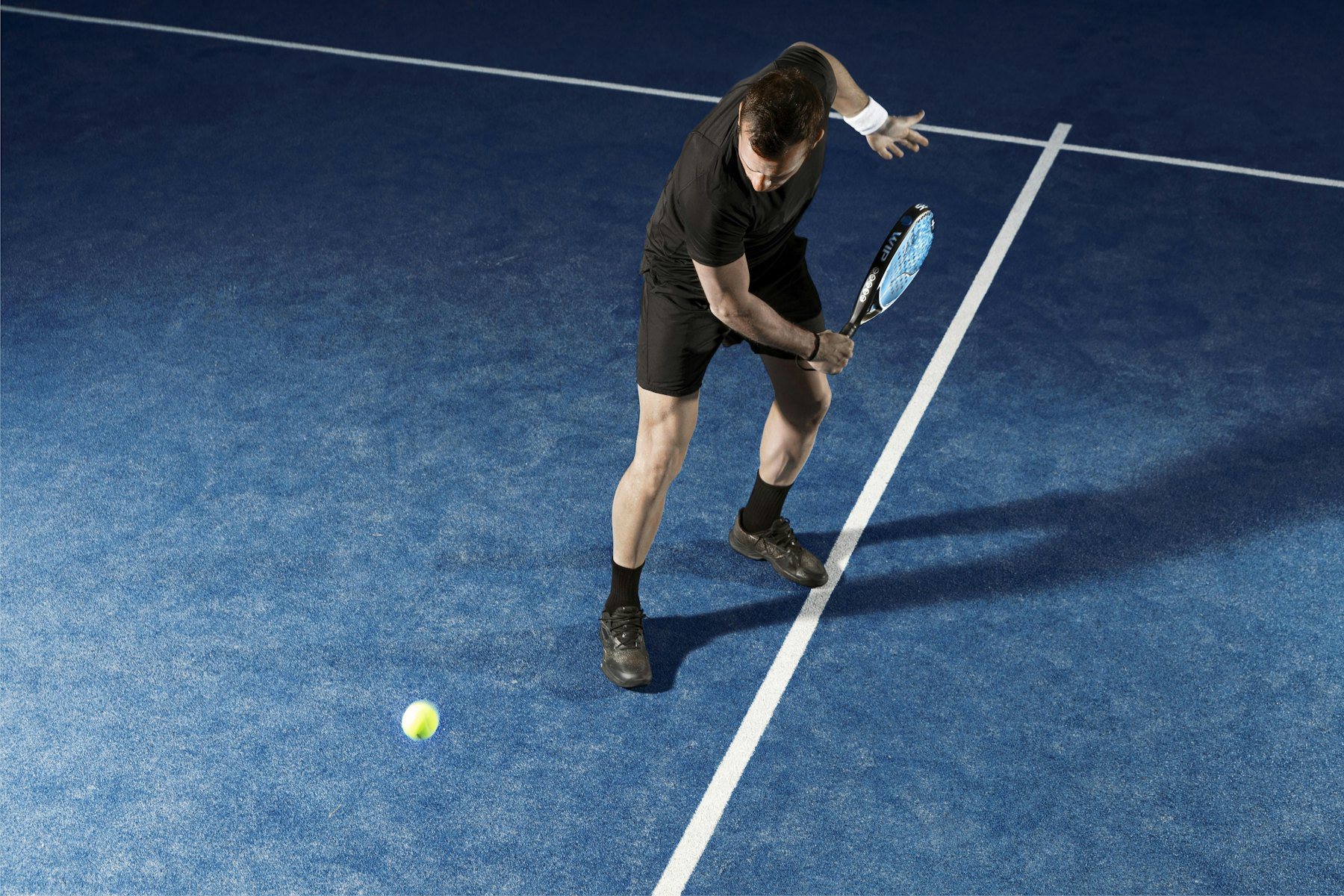
The padel serve is the gentlest shot in racket sports, and that fools people. It is not meant to win the point on its own. It is meant to start the point on your terms.
The rules
- Stand behind the service line, between the centre line and the side wall.
- Bounce the ball once on the ground behind the service line.
- Hit it at or below waist height, after the bounce.
- Serve diagonally into the opponents' service box.
- You have two attempts.
At the moment you hit the ball, at least one foot has to be on the ground, and neither foot may touch the line.
Faults
The serve is a fault if:
- it lands outside the diagonal service box, or on the service line,
- it hits the metal mesh after bouncing in the box,
- you miss the ball completely,
- you hit it above waist height.
If the serve touches the net and lands in the box, it is a let: you take that serve again. If it touches the net and hits the mesh, it is a fault.
Making it count
A serve that is just "in" gives your opponents an easy return. A few ideas to make it harder:
- Aim at the glass. A serve that lands deep and runs into the side glass is hard to read.
- Serve to the body. Pointed at the receiver's hip, it cramps their swing.
- Use slice. Hitting slightly under the ball keeps it low after the bounce.
- Mix it up. The same serve every time is the easiest one to return.
Then go to the net
The biggest advantage of serving in padel is not the serve itself, it is what comes next. After you serve, move forward with your partner to the net. In padel, the pair who holds the net usually wins the point. More on that in where to stand.